
Editor’s note: This article was updated in February 2019 to include additional Raspberry Pi rivals.
As versatile as the $35 Raspberry Pi is, it is just one of many single-board computers available to buy today.
More about Innovation
- Sovereign AI Explained
- The Rise of the AI-Native Factory
- Why Data Determines AI Success
- SS&C Intralinks DealCentre AI vs. Datasite: Which platform is built for the future of dealmaking?
The Raspberry Pi strikes a fine balance between performance, price, and usability, but leaves plenty of room for other boards to tweak that formula.
In Fall 2018, there was the release of a swathe of new boards, some ramping up the price to add PC-like features — such as support for fast SSD storage and Intel Core processors — while others trim specs to cut costs.
These boards are generally aimed at software developers, hardware hackers, and tech enthusiasts working on projects like home media servers. However, it’s worth pointing out that few boards are as accessible or offer the same breadth of stable software as the Raspberry Pi.
SEE: Inside the Raspberry Pi: The story of the $35 computer that changed the world (TechRepublic cover story PDF)
Here are the most interesting single-board computers revealed or released in recent months.
La Frite
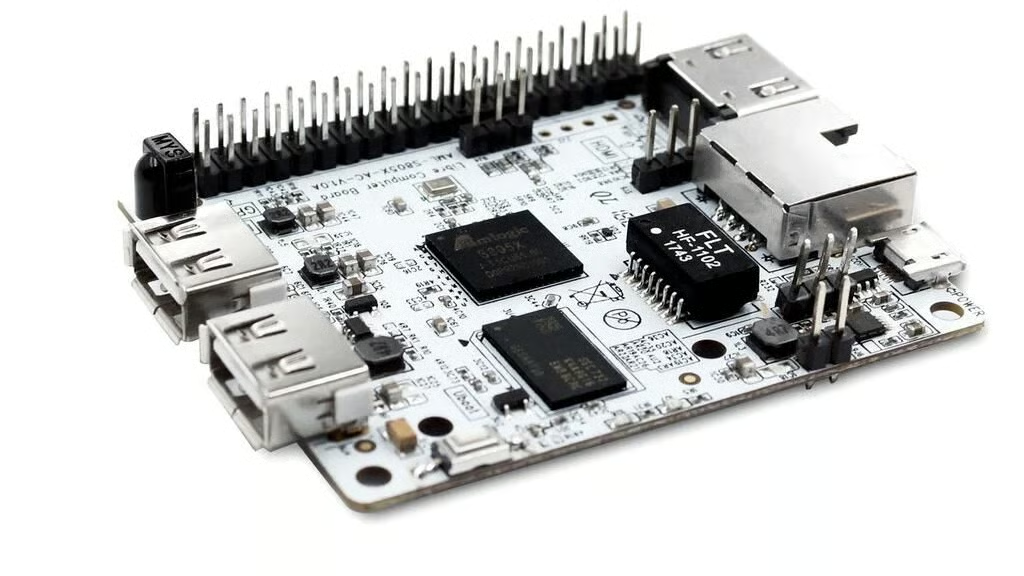
What the La Frite offers
The $15 La Frite comes close to matching the $35 Raspberry Pi 3 B+ in some key respects, using the same underlying Arm-based CPU and even offering faster DDR4 memory.
On paper, the La Frite also promises comparable video playback performance to the Raspberry Pi 3 B+, can output to 1080p displays via HDMI 1.4, and offers two USB 2.0 ports.
As you’d expect there are various cutbacks compared to the Pi and other Raspberry Pi competitors. The board is missing the Raspberry Pi 3 B+’s Wi-Fi support, offers a slightly slower wired Ethernet connection, and has a slightly slower processor.
Specs for the La Frite
- Quad 64-bit ARM Cortex-A53 CPU Cores at 1.2GHz
- 2 Geometry + 3 Pixel ARM Mali-450 GPU Cores
- 512MB or 1GB DDR4 @ 2400MHz
- 128Mb SPI NOR
- HDMI 1.4 with 1080P Output
- 100Mb Fast Ethernet
- USB 2.0 Host
- USB 2.0 OTG
- IR Sensor
Where to buy the La Frite
The board is available to buy here for $15.
NanoPi NEO4
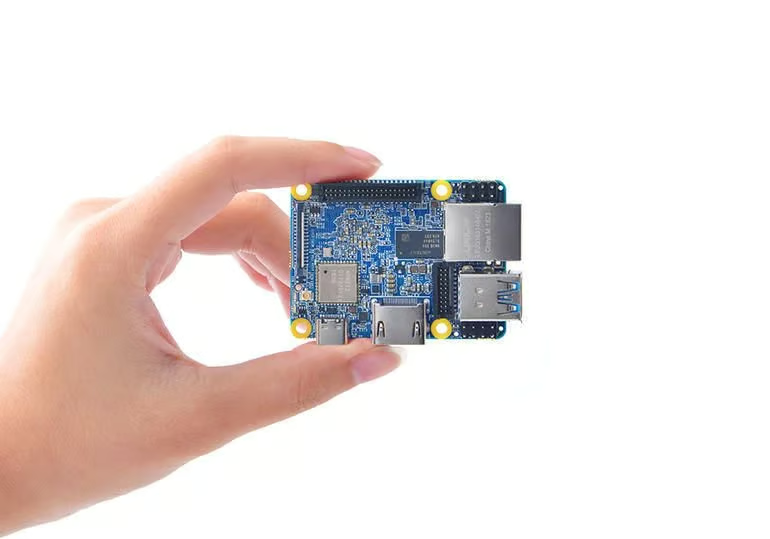
What the NanoPi NEO4 offers
The cheapest six-core single-board computer to be released, boasting relatively modern features like USB 3.0 and support for 4K displays.
But there’s a catch, the board may only cost $45, only $10 more than the Raspberry Pi 3 B+, but it only comes with 1GB of memory, has slower Wi-Fi, and fewer Type-A USB ports.
If you can work within limitations of the memory, the board also supports reasonably fast data transfer via its USB 3.0 and Gigabit Ethernet ports, as well as one USB 2.0 Type-C port. Additionally, there’s potential for adding fast SSD storage via a PCIe x2 interface and 4K video out via HDMI 2.0.
Specs for the NanoPi NEO4
| CPU | Model: Rockchip RK3399; Number of Cores: big.LITTLE, 64-bit Dual Core Cortex-A72 + Quad Core Cortex-A53; Frequency: Cortex-A72 (up to 2.0GHz), Cortex-A53 (up to 1.5GHz) |
|---|---|
| GPU | Mali-T864 GPU, supports OpenGL ES1.1/2.0/3.0/3.1, OpenVG1.1, OpenCL, DX11, and AFBC |
| VPU | 4K VP9 and 4K 10bits H265/H264 60fps decoding, Dual VOP, etc. |
| DDR3 RAM | 1GB DDR3-1866 |
| Storage | eMMC: No Onboard eMMC, but has an eMMC socket |
| USB Host | USB 3.0*1: USB 3.0 Type-A ports; USB Type-C*1: Supports USB2.0 OTG and Power input; USB 2.0*2: USB 2.0 Host, one is Type-A, the other is 2.54mm header |
| WiFi | 802.11 b/g/n, Bluetooth 4.0 combo module |
| Antenna Interface | Antenna*1: IPX Connector |
| Audio input/output Port | Video input: One 4-Lane MIPI CSI, up to 13MPix/s; Video Output: HDMI*1: HDMI 2.0a, supports 4K@60Hz, HDCP 1.4/2 |
| MicroSD Slot | MicroSD*1 for external storage up to 128GB |
| LED | Power LED (Red)*1; GPIO Controlled LED (Green)*1 |
| PCB Dimension | 8 Layer; 60*45mm |
| Power | DC 5V/3A |
Where to buy the NanoPi NEO4
Available here for $45.
NanoPi M4
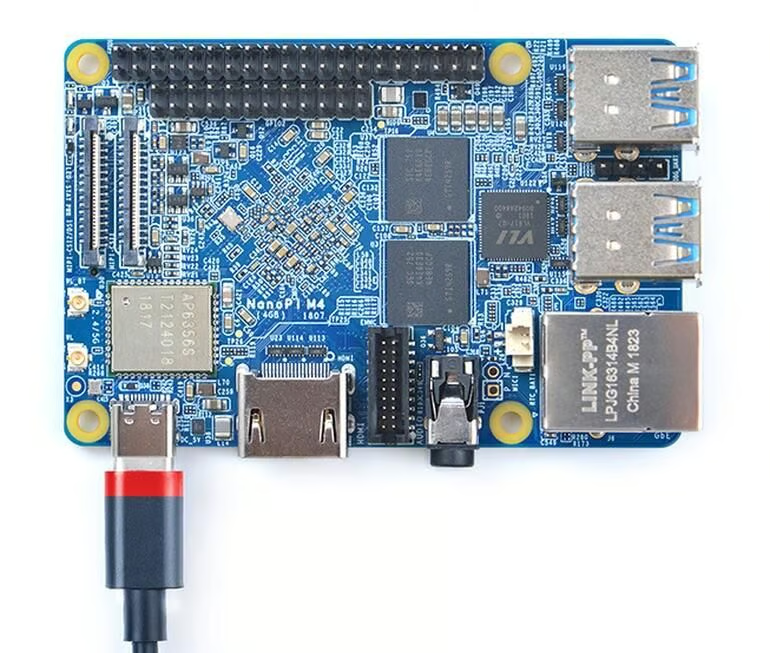
What the NanoPi M4 offers
The NanoPi M4 is almost double the price the $35 Raspberry Pi but ups its specs across the board.
Notable features include four USB 3.0 ports, a USB Type-C port, 2GB DDR3 memory, a six-core processor, support for 4K displays and hardware-accelerated 4K video playback, and 64 general-purpose input-output (GPIO) pins for hooking up hardware. It also includes an interface that supports two 13-megapixel cameras.
While the Pi supports a far wider range of open-source operating systems, the NanoPi M4 is listed as supporting Android 7.1, alongside Ubuntu 18.04 Desktop and Ubuntu Core.
It’s worth noting that some users of recent NanoPi boards have also encountered driver problems and system setup issues, so this board and the NEO4 may be one for the more technically proficient.
Specs for the NanoPi M4
| CPU | Model: Rockchip RK3399 Cores: Six cores, 2GHz 64-bit dual-core Cortex-A72 and 1.5GHz quad-core Cortex-A53 |
|---|---|
| GPU | Mali-T864, supports OpenGL ES1.1/2.0/3.0/3.1, OpenVG1.1, OpenCL, DX11, and AFBC |
| Supported codecs | 4K VP9 and 4K 10bits H265/H264 60fps decoding, Dual VOP |
| Memory | Dual-channel 4GB LPDDR3-1866 (for an additional $30) or dual-channel 2GB DDR3-1866 |
| Storage | eMMC: no Onboard eMMC, but has a eMMC socketMicroSD Slot: MicroSD for external storage up to 128GB |
| Connectivity | Ethernet: Native Gbps Ethernet WiFi: 802.11a/b/g/n/ac, Bluetooth 4.1, Wi-Fi and Bluetooth combo module, dual antenna interface |
| Audio | 3.5mm dual-channel headphone jack, or HDMI Audio Input: microphone input interface |
| Video Input | One or two four-Lane MIPI-CSI, dual ISP, up to 13MPix/s, supports simultaneous input of dual camera data |
| Video Output | HDMI 2.0a, supports 4K@60Hz, HDCP 1.4/2.24-Lane MIPI-DSI*1 |
| USB | 4 x USB 3.0 Type-A ports USB Type-C: Supports USB2.0 OTG and Power input 2 x USB Host, included in GPIO2 2.54mm pitch pin header |
| Pin-headers | 40-pin GPIO, 2.54mm pitch pin-header 3 x 3V/1.8V I2C, up to 1 x 3V UART, 1 x 3V SPI, 1 x SPDIF_TX, up to 8 x 3V GPIOs, 1.8V 8 channels I2S 24-pin GPIO, 2.54mm pitch pin-header 2 x independent native USB 2.0 Host interfaces, PCIe x2, PWM, PowerKey Serial Debug Port: 2.54mm pitch four-pin-header, 3V level, 1500000bps |
| LED | Power LED (Red), GPIO Controlled LED (Green) |
| Others | RTC: Two-pin 1.27/1.25mm RTC battery input connector. Working Temperature: -20℃ to 70℃ |
| Power | DC 5V/3A |
Where to buy the NanoPi M4
Available to buy here for $65.
LattePanda Alpha
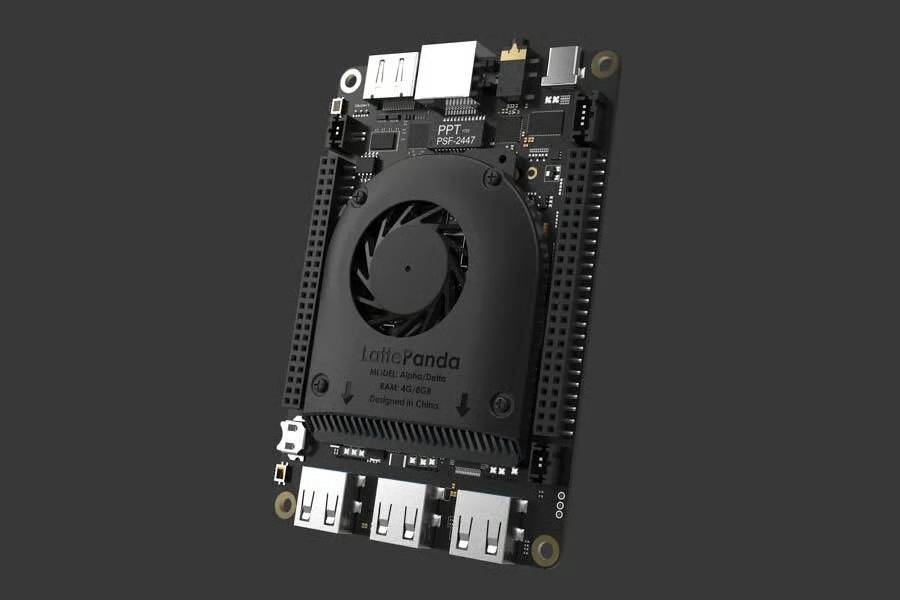
What the LattePanda Alpha offers
Not a Pi competitor, but the $358 LattePanda Alpha does use the same class of Intel processor as found in the $1,200 12-inch MacBook.
The board’s high price buys you PC-like specs, including 8GB of DDR3 memory and 64GB of fast eMMC v5.0 Flash storage, alongside Gigabit Ethernet, 802.11ac Wi-Fi, USB 3.0 ports, a USB Type-C port, 4K video out and dual M.2 connectors that could be used for hooking up fast NVMe SSD storage.
The board is available with Windows 10 Pro, which pushes the price up to $398, as well as being compatible with a broad range of Linux-based operating systems. The Alpha also has 2 x 50-pin headers for hooking up hardware, as well as an Arduino Leonardo co-processor.
Specs for the LattePanda Alpha
| CPU | Intel 7th Gen Core m3-7y30 |
|---|---|
| Core | 1.6-2.6GHz Dual-Core, Four-Thread |
| Graphics | Intel HD Graphics 615, 300-900MHz |
| RAM | 8GB LPDDR3 1866MHz Dual-Channel |
| Connectors | 1x M.2 M Key, PCIe 4x, supports NVMe SSD and SATA SSD. 1x M.2 E Key, PCIe 2x,supports USB2.0, UART, PCM |
| Connectivity | WiFi 802.11 AC, 2.4G & 5G Dual Band. Bluetooth 4.2. Gigabyte Ethernet |
| USB Ports | 3x USB 3.0 Type A. 1x USB Type C, supports PD, DP, USB 3.0 |
| Display | HDMI Output Type-C DP Support Extendable eDP touch displays |
| Co-processor | Arduino Leonardo |
| GPIO & other features | 2x 50 GPIOs including I2C, I2S, USB, RS232, UART, RTC. Power Management. Extendable power button |
| OS | Windows 10 Pro, various Linux |
Where to buy the LattePanda Alpha
Available here from $358.
Odroid-H2
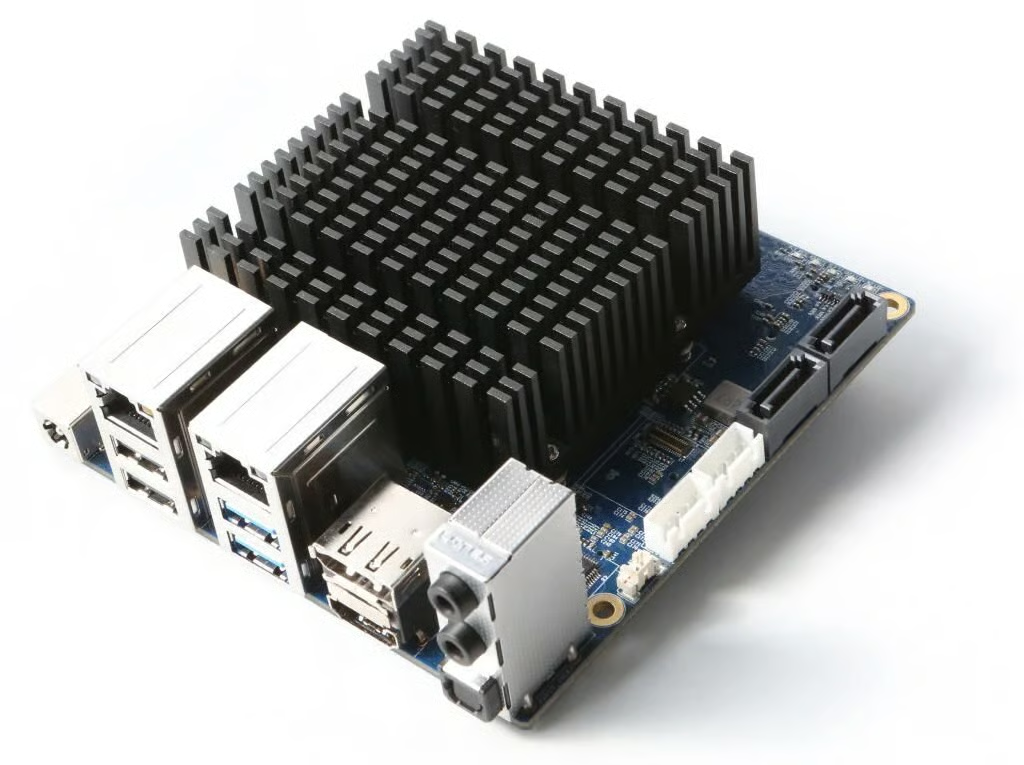
What the Odroid-H2 offers
With specs more akin to a low-end PC, the Odroid-H2 costs almost three times the price of the $35 Raspberry Pi 3 B+.
As an x86 Intel Celeron based board, it can run a wider range of Linux-based operating systems than a typical Arm-based, single-board computer.
Its specs stand out from the crowd too, with the ability to add fast SSD storage via its 4 x PCIe 2.0 NMVe interface and SATA 3.0 ports, and support for up to 32GB of DDR4 RAM. Additionally, there is fast network connectivity via the two gigabit Ethernet ports, although no mention of Wi-Fi support. However, while Odroid boards have a good reputation for software support, this board doesn’t appear to be targeting hardware hackers, with only a 20-pin expansion header.
The board’s 2.3GHz Intel J4105 processor — a “Gemini Lake” system-on-a-chip dating from 2017 — is also faster than the Arm Cortex A53 / A72-based CPUs found in recent SBCs.
Specs for the Odroid-H2
| CPU | 2.3Ghz Quad-core processor J4105 (14nm) with 4MiB cache |
|---|---|
| Memory | Dual-channel Memory DDR4-PC19200 (2400MT/s), support for up to 32GB RAM with two SO-DIMM slots |
| Expansion | 4 x PCIe 2.0 for one NVMe storage, 2 x gigabit Ethernet ports, 2 x SATA 3.0 |
| GPU | Intel UHD Graphics (Gen9.5) 600 (GT1) 700Mhz. Support for SSE4.2 accelerator (SMM, FPU, NX, MMX, SSE, SSE2, SSE3, SSSE3, SSE4.1, SSE4.2, AES) |
| Display | HDMI 2.0 and DP 1.2 multiple video output |
Where to buy the Odroid-H2
Available here for $111.
Orange Pi 3
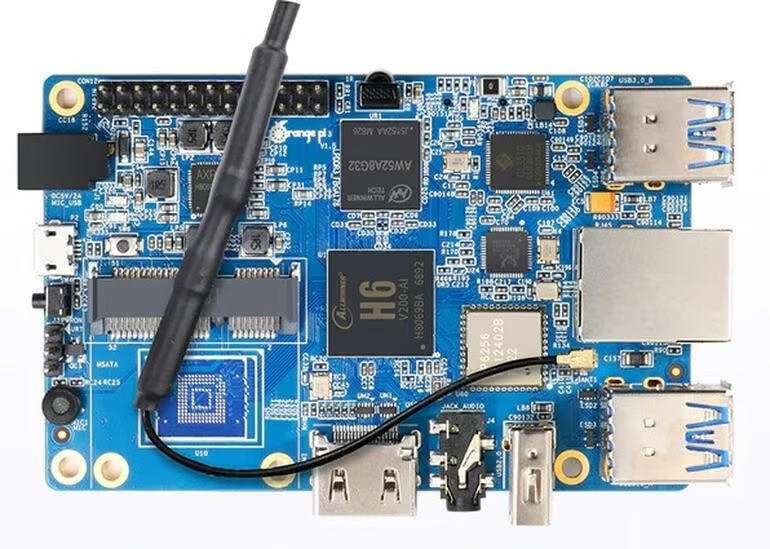
What the Orange Pi 3 offers
Orange Pi’s latest flagship board boasts specs better than the Raspberry Pi 3 Model B+ for the same price as the $35 computer.
The latest board in the Orange Pi family, the Orange Pi 3, packs a quad-core 1.8GHz CPU, 2GB DDR3 RAM, four USB 3.0 ports, support for 4K displays via HDMI 2.0a, Gigabit Ethernet, onboard mPCIe 2.0, and Bluetooth 5.0.
All of these specs improve on the most powerful Raspberry Pi, the Pi 3 Model B+, and the makers of the Orange Pi 3 suggest their board has a similar range of uses to Raspberry Pi, from desktop computer to media center.
Android 7, Ubuntu, and Debian are listed as officially supported operating systems on the Orange Pi 3 and are available to download here. However, it’s worth noting that historically Orange Pi boards have been criticized for having poor driver support, missing software, and unstable versions of older operating systems.
The Orange Pi 3 also lacks the expandability of the Raspberry Pi, as it only has a 26-pin header for hooking up the machine to other electronics.
The board is built around the same Allwinner H6 SoC as last year’s $20 Orange Pi One Plus, but the Orange Pi 3 adds additional USB ports and memory.
Specs for the Orange Pi 3
| CPU | H6 Quad-core 64-bit 1.8GHZ ARM Cortex-A53 |
|---|---|
| GPU |
|
| Memory + Onboard Storage | Four Types:
|
| Wi-Fi + BT | AP6256, IEEE 802.11 a/b/g/n/ac, BT5.0 |
| Onboard Network | 10/100M/1000M, ethernet RJ45 |
| Network Chip | RTL8211 |
| Audio Input | MIC |
| Audio Output | HDMI 2.0a and 3.5 mm AV Jack |
| Video Output | HDMI 2.0a and CVBS |
| Video Decoding |
|
| PCIE |
|
| Power Source | DC input, MicroUSB (OTG) |
| PMU | AXP805 |
| USB 2.0 Ports | 1*USB 2.0 Host, 1*USB OTG 2.0 |
| USB 3.0 Ports | 4*USB 3.0 Host |
| Low-level peripherals | 26 Pin |
| GPIO (1×3) pin | UART, ground |
| LED | Power LED, Status LED, and USB 3.0 LED |
| IR | YES |
| Key | Power (SW4) |
| Supported OS | Android 7.0, Ubuntu, Debian |
Where to buy the Orange Pi 3
The Orange Pi 3 is available to buy here for $35, with a 1GB version also available for $30. The boards are also available with 1GB RAM / 8GB eMMC Flash storage for $35 and 2GB RAM / 8GB eMMC Flash storage for $40.
Rock Pi 4
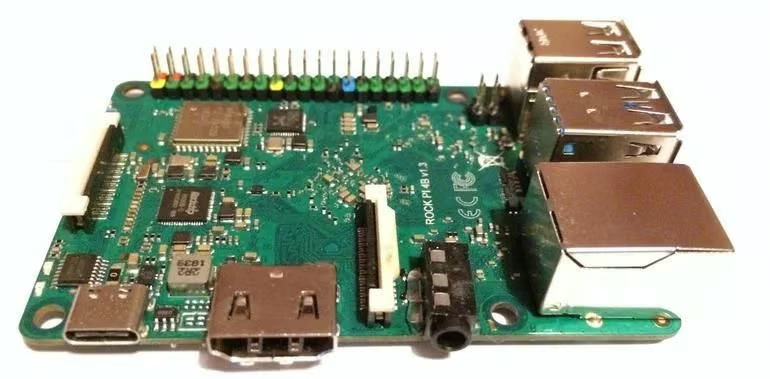
What the Rock Pi 4 offers
The Rock Pi 4 promises a decent balance between price and power. The Rock Pi 4 starts at $39, making it the cheapest single-board computer based on the powerful Rockchip RK3399 system-on-a-chip.
The processor is capable for the price, with a dual-core 2.0GHz Arm Cortex-A72 paired with a quad-core 1.5GHz Arm Cortex-A53, smooth 4K playback is possible with the right media player courtesy of the HDMI 2.0 port and Mali-T864 GPU, fast SSD storage is also an option, via an M.2 interface supporting up to a 2TB NVMe SSD, and the ability to add up to 128GB eMMC storage to the board. The memory is relatively fast — 64-bit, dual-channel 3,200Mb/s LPDDR4 — and ranges from 1GB ($39) to 4GB ($75).
Portwise, there are four USB Type-A ports — one USB 3.0 host, one USB 3.0 OTG, and two USB 2.0 hosts. There’s also a 40-pin expansion header for connecting to other electronics, though this isn’t 100% GPIO compatible with the header on the Raspberry Pi. The $39 Model A lacks wireless connectivity, while the $49 Model B offers 802.11ac Wi-Fi and Bluetooth 5.0.
The board supports more Linux distributions than some Raspberry Pi rivals, including: Android, Android TV, Debian, Ubuntu Server, Armbian 5.67, and retro-games OS Recalbox.
In testing the $75 Rock Pi 4 Model B, TechRepublic found the board comprehensively outperformed the Raspberry Pi 3 Model B+, but also both the Android and Debian images suffered from some instability and jankiness. The Rock Pi 4 Model B also came with a heatsink, so board wouldn’t fit into most Raspberry Pi cases.
Specs for the Rock Pi 4
| CPU | 64-bit hexa core processor dual core 1.8GHz Cortex-A72 with quad 1.4GHz Cortex-A53 |
|---|---|
| GPU | Mali T860MP4 supports OpenGL ES 1.1/2.0/3.0/3.1/3.2, Vulkan 1.0, Open CL 1.1 1.2, DX11 |
| Memory | 64-bit dual channel LPDDR4@3200Mb/s between 1GB and 4GB |
| Storage | Optional industrial compatible high performance eMMC module, 8/16/32/64/128GB available. uSD slot supports up to 128G uSD card. M.2 connector supports up to 2T M.2 NVME SSD |
| Display | HDMI 2.0 up to 4k@60 |
| Audio | Audio 3.5mm jack with mic, HD codec that supports up to 24-bit/96kHz audio |
| USB | USB 3.0 OTG x1, USB 3.0 HOST x1, USB 2.0 HOST x2 |
| Connectivity | Gigabit Ethernet with PoE support (requires additional HAT), 802.11 ac Wi-Fi & Bluetooth 5.0 (Model B only) |
| Peripherals | MIPI DSI 2 lanes via FPC connector, HDMI and MIPI DSI can work at the same time, support mirror mode or extend mode, Camera MIPI CSI MIPI CSI 2 lanes via FPC connector, support up to 800MP camera |
| Expansion | 1 x UART, 2 x SPI bus, 2 x I2C bus, 1 x PCM/I2S, 1 x SPDIF, 1 x PWM, 1 x ADC, 6 x GPIO, 2 x 5V DC power in, 2 x 3.3V power pin Size: 85mm x 54mm |
| Other | RTC battery connector for time backup (optional) |
| Power | Supports USB Type-C PD 2.0, 9V/2A, 12V/2A, 15V/2A, 20V/2A power supplies. Qualcomm Quick Charge, supports QC3.0/2.0 adapter, 9V/2A, 12V/1.5A |
Where to buy the Rock Pi 4
The Rock Pi Model A costs $39 with 1GB, $49 with 2GB, and $65 with 4GB. The Model B, which adds wireless 802.11ac Wi-Fi and Bluetooth 5.0, sells for $49 for 1GB, $59 for 2GB, and $75 for 4GB.
The Rock Pi 4 is available from various authorized resellers and you can get more information here.
Pine H64 Model B
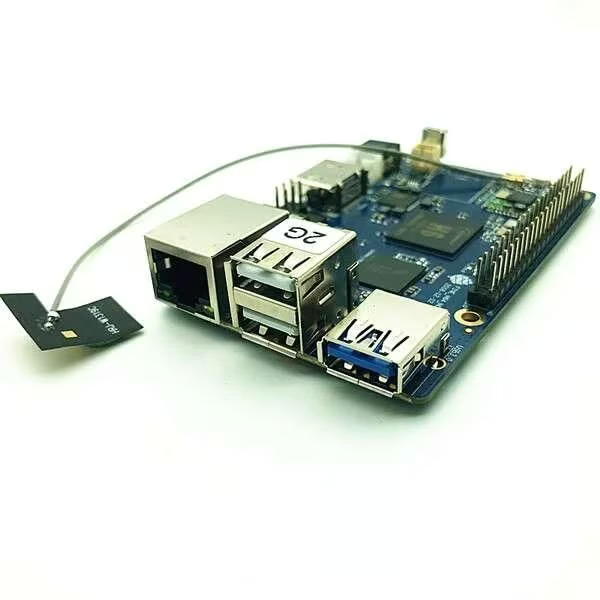
What the Pine H64 Model B offers
The Pine H64 Model B may be the same price as the Raspberry Pi 3 Model B+, but it offers double the memory, is capable of 4K video playback on paper, and has USB 3.0, HDMI 2.0, and Gigabit Ethernet. However, it has fewer USB ports overall than the Raspberry Pi 3 Model B+.
The board succeeds last year’s Pine H64 Model A, with the main improvement being support for Wi-Fi and Bluetooth.
Thanks to the possibility of hooking up storage, Wi-Fi cards, or USB 3.1 to the board’s mini-PCIe interface, the Pine H64 could be used as network-attached storage or as a server on top of the usual use case of a software and hardware development board.
Unlike the Raspberry Pi, only a couple of operating systems, Armbian and Android 7.0, are officially supported by the single-board computer.
Specs for the Pine H64 Model B
| System-on-a-chip | Allwinner H6 |
|---|---|
| CPU | Quad-core, Arm Cortex A53-based processor |
| GPU | Dual-core Mali-T720 MP2 |
| Memory | 1/2/3GB LPDDR3 |
| Storage | eMMC flash module, micro SD card (bootable), 128 Mbit SPI flash |
| Video | HDMI 2.0a output |
| Audio | 3.5mm stereo earphone/mic plug |
| Connectivity | Gigabit Ethernet, Wi-Fi, Bluetooth |
| USB | 2 x USB 2.0 host, 1 x USB 3.0 host |
| Expansion | 2 x 20 Raspberry Pi 2-compatible GPIO header, mini-PCIe connector, Wi-Fi/Bluetooth module header, SDIO 3.0 and UART |
| Misc. | IR receiver |
Where to buy the Pine H64 Model B
The board will be available with 1GB for $24.95, 2GB for $34.95 and 3GB for $44.95 in 2019.